
5.18 International Museum Day | A New Birth of Hunan Charm: A Romantic Encounter Between Millennia-Old Civilization and Future Technology
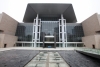

The 2025 International Museum Day theme is “The Future of Museums in Rapidly Changing Communities.” As vital connectors, innovators, and guardians of cultural identity, museums are expected to keep abreast with the times. In line with the theme, the Hunan Museum launched a themed press briefing titled “Hunan Charm: A New Birth”, in collaboration with various government agencies and enterprises. The briefing highlighted recent achievements and future plans of the museum across three dimensions: in-depth research, digital revitalization, and innovation in communication and public service. Through digitization and innovative interaction, the museum aimed to explore and reveal the richness of cultural relics, reach a broader public, and expand its cultural influence, so as to proactively address its development challenges amid the rapidly changing society, and ultimately breathe new life into ancient cultural heritage in a new era.
On the morning of May 16, the “Hunan Charm: A New Birth” themed press briefing, hosted by the Hunan Museum, was held in the academic lecture hall on the first floor of the museum. Attendees included Li Lihui, Secretary of the Discipline Inspection Commission of the Hunan Museum, Jin Fan, Deputy Director of the Hunan Museum, in-house specialists, and representatives of partner organizations. Over 30 media outlets from the central, provincial, and municipal levels participated.


Technological Decoding of Millennia-old Civilization: New Breakthroughs in Mawangdui Research
In response to the era’s call for development driven by technology and innovation, the Hunan Museum continues to empower cultural heritage research through science and technology. Thanks to the support of modern high-definition equipment, breakthroughs have been made in the ongoing research of artifacts unearthed from the Western Han Dynasty Tombs at Mawangdui.
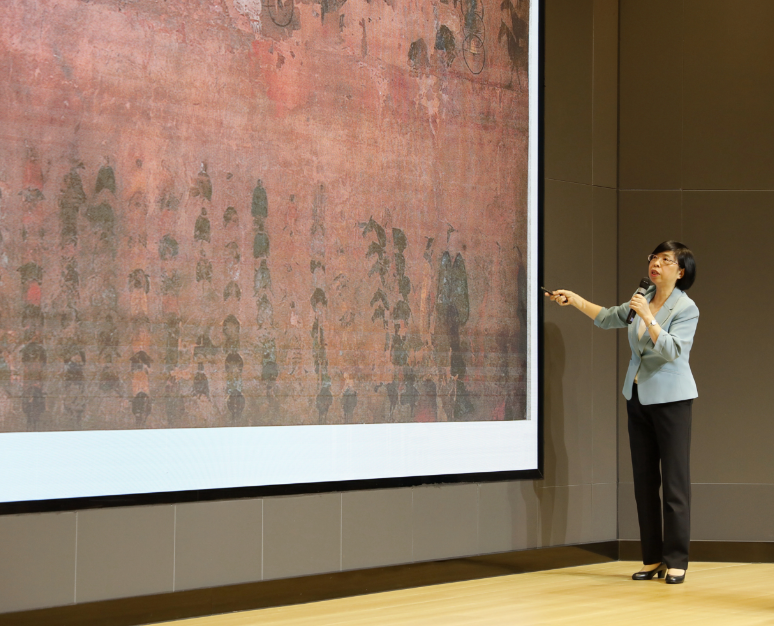
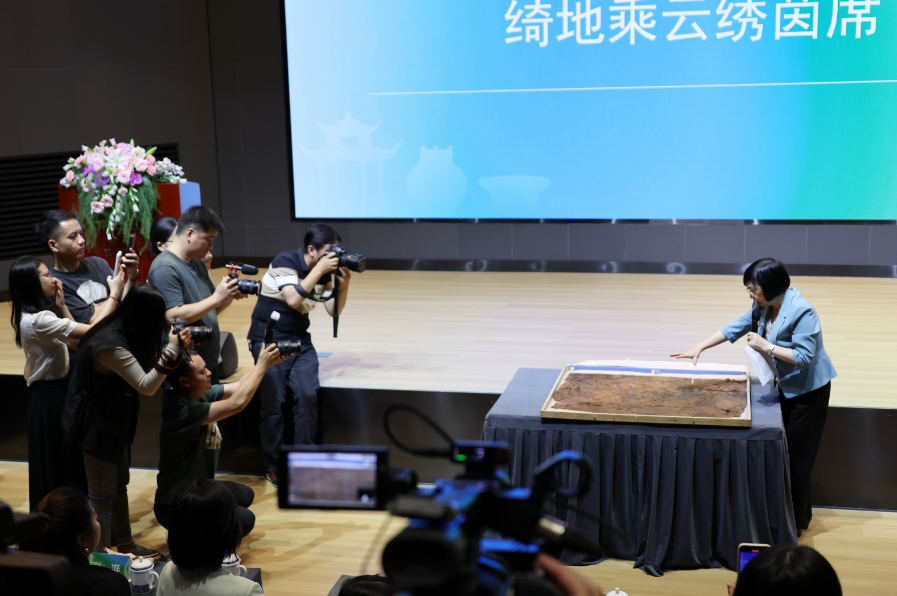
At the briefing, Yu Yanjiao, director and specialist at the Hunan Museum’s Mawangdui Han Tombs and Collection Research Exhibition Center, unveiled three major research findings:
·For the first time, the Embroidered Silk with “Chengyun Pattern” (riding-clouds pattern) was correctly identified as the earliest archaeological example of a silk sitting mat. It had long been labeled a “pillow towel” since its excavation. After in-depth research into excavation records and artifact placement, specialists identified it as a “yinxi” (sitting mat) rather than a “pillow towel”.
·Empowered by high-precision scanning technology, specialists found multiple repainting traces in key figures such as the “Dihun” (heaven gatekeeper) and “Shenbao” (divine panther) on the T-shaped silk painting from the Mawangdui tomb.
·Specialists identified an embroidered pattern known as “Double Phoenix Riding Clouds”.
Digital Revitalization, Reborn Han Dynasty Charm: Technology Reconstructs the Han Dynasty Civilization
At the briefing, He Ye, Director of the Data Center of Hunan Museum, announced significant results from two projects: “Tanyuan Initiative” and “Digital Han Life”. Using digital technology to reconstruct history and innovative experiences to transcend time and space, these initiatives represented a new chapter in the fusion of tradition culture and modern technology.
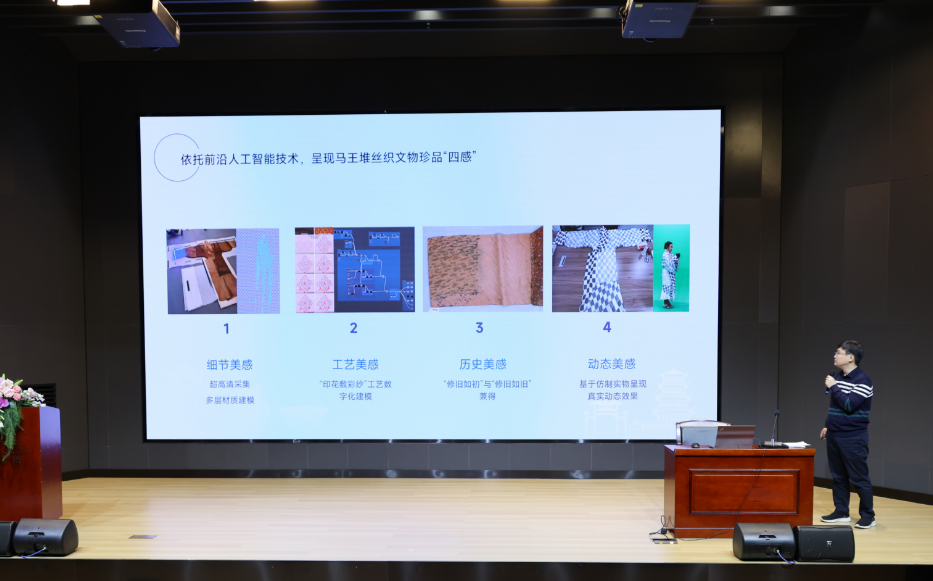
“Tanyuan Initiative 2024”, guided by the Department of Science and Technology Education of the National Cultural Heritage Administration, was jointly launched by the China Cultural Heritage Information and Consulting Center (Data Center of the National Cultural Heritage Administration), Tencent SSV Digital Culture Lab, Tencent Research Institute, and China Alliance of Social Value Investment (Shenzhen). With the support of the Initiative, Hunan Museum collaborated with Beijing Zhixin Technology Co., Ltd. to undertake a project – “Tanyuan Initiative 2024: Intelligent Digital Restoration of Mawangdui Silk Artifacts”. Leveraging cutting-edge AI technology, the project successfully created a digital twin of a Western Han straight lapel gauze garment with painted patterns. This led to four pioneering accomplishments of the Hunan Museum:
◆ First-time millimeter-level restoration of silk artifacts from the Mawangdui tombs;
◆ First-time implementation of both “restore as new” and “restore as old” philosophies into the restoration of silk artifacts from the Mawangdui tombs;
◆ First-time integration of multiple cross-disciplinary technologies into the results of Mawangdui silk artifacts research;
◆ First-time realistic simulation of the draping and dynamic effects of Western Han silk garments.
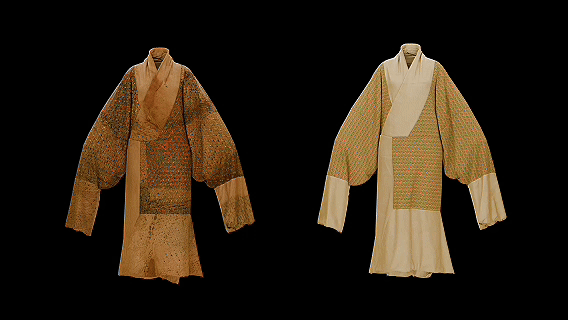
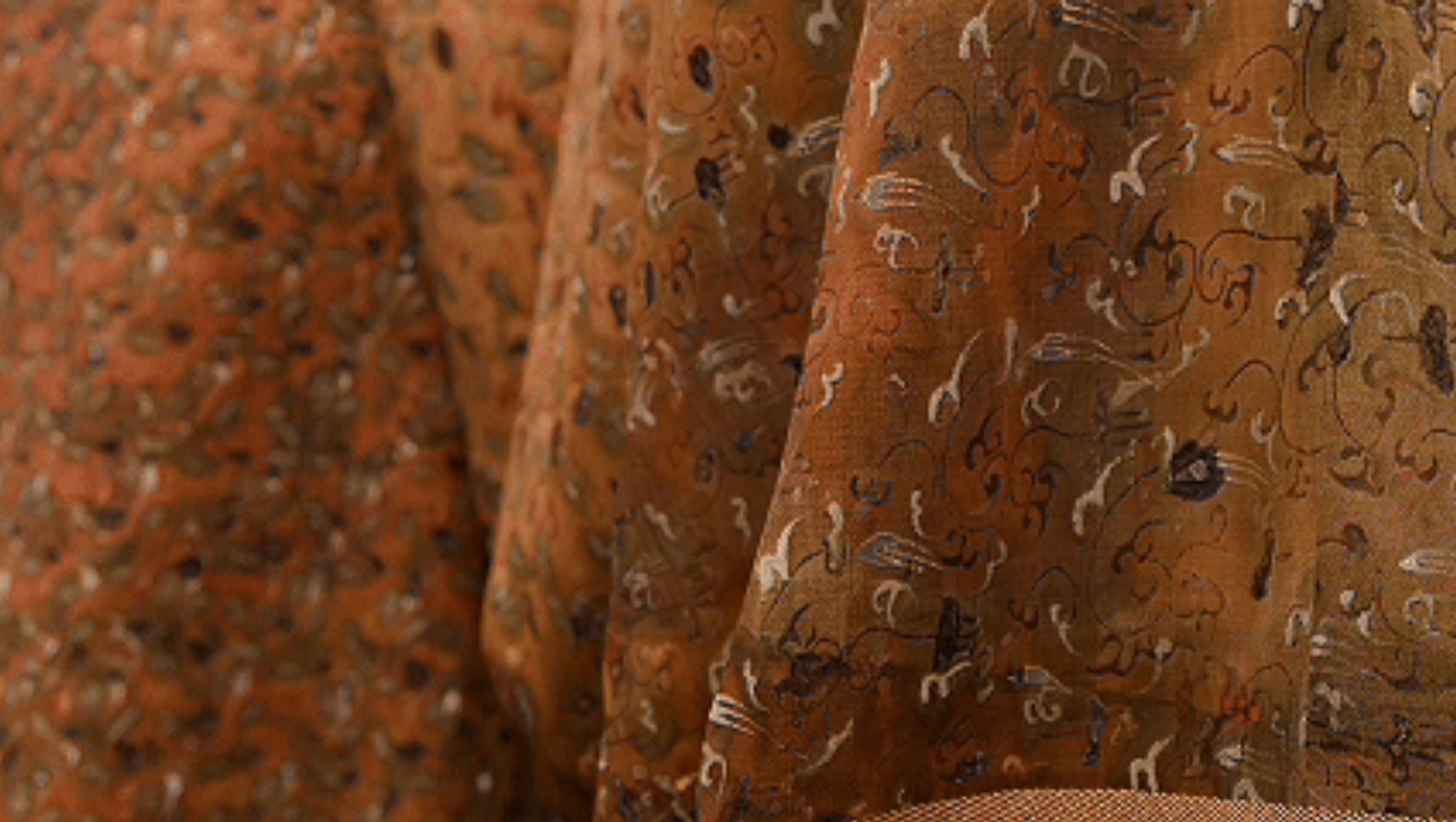
Exploring innovative paradigms for revitalizing Chinese culture through technology, the project showcased the detailed aesthetics, craftsmanship, historical significance, and dynamic beauty of silk artifacts from Mawangdui, granting them a “digital rebirth”.
The “Digital Han Life”, one of the digital museum projects, is jointly advanced by the Hunan Museum and the Hunan Malanshan Innovation Center for Culture Digitalization. The briefing unveiled its three core achievements to the public: the “Digital Gene Bank of Mawangdui Pattern”, the “Pattern Reborn” exhibition, and the “Mawangdui New Han Clerical Script Font”. Following the launch of the “Digital Han Life” IP brand in January 2024, these fruits are milestones of the digitization of cultural artifacts, marking the substantial transformation of Mawangdui Han Tomb culture from “hard drives in storage houses” to “modern life”.
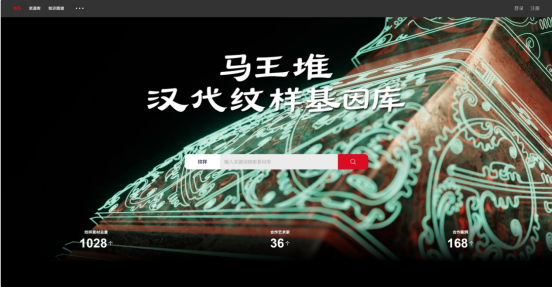
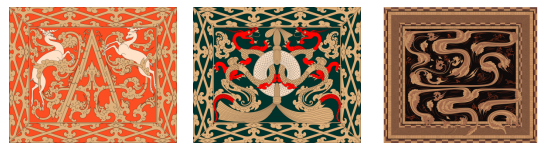
◆ The “Digital Gene Bank of Mawangdui Patterns”, based on over 3,000 patterns on Han Dynasty lacquerwares and silk, builds a systematic database of patterns in the Han Dynasty. Through systematic collection and digital reconstruction of classic patterns on Mawangdui artifacts, the Bank achieves high-precision restoration, cultural interpretation, and re-creation of the patterns, forming a resource platform for research, design, and dissemination. It creates a closed-loop model, including processes from artifact digital collection, vectorized extraction, and pattern identification and re-creation to industrial application, which is a benchmark case in cultural digitization.
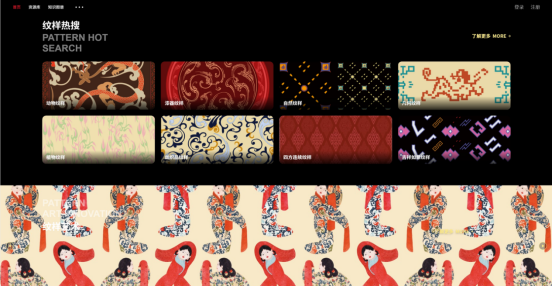
◆ The “Pattern Reborn” exhibition, soon to open at the museum, will feature six sections, including the “Digital Gene Bank of Mawangdui Pattern”, dynamic patterns demonstration, in-depth re-creations by artists, intangible cultural heritage (ICH) works inspired by Mawangdui patterns, digital art displays, and a cultural and creative products pop-up. Guided by the digital mascot, wildcat “Miaomiao”, visitors can immerse themselves in Han Dynasty banquet and fashion scenes, experiencing the unique charm of Han patterns through artists’ and ICH masters’ reinterpretations. Moreover, the exhibition will enable millennia-old aesthetics to be displayed on daily dress and house ornaments, truly bringing artifacts into everyday living.

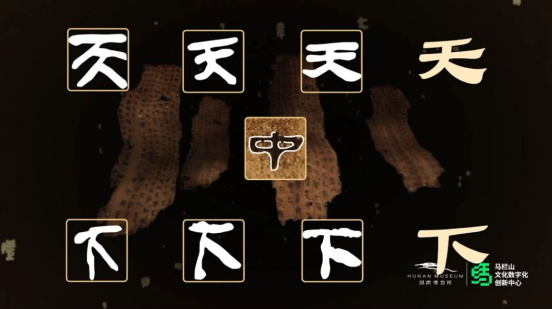
◆ The “Mawangdui New Han Clerical Script Font” is set for release in mid-June. It is based on a database of over 130,000 characters from Mawangdui silk manuscripts. With the help of digital technology, the Font digitizes the manuscripts’ ink strokes, accurately recreating the “silkworm head, wild goose tail, and square-round balance” calligraphy style in the transitional period between seal and clerical scripts. It retains both the essence and charm of Han clerical script and the standards and usability of modern fonts, reviving the aesthetic quintessence of Han Dynasty calligraphy evolution.

Ancient Crafts Reimagined, Hunan Charm Reborn: Safeguarding National Treasures through Collaboration
At the briefing, Wu Di, Office Director of the Hunan Museum, announced the launch of the “Hunan Charm: A New Birth – National Treasures Preservation Plan”. Partnering with ICH bearer Peng Nanke, Hunan Daily, Sina Weibo, Douyin Group, and Alipay, the Plan employs ICH craftsmanship revival, digital dissemination, and cross-sector collaboration to revitalize artifacts.

Wu introduced the project’s background, significance, features, cultural value, and promotional plans. With “contemporary translation of ancient techniques” as its narrative thread, the Plan focuses on recreating an ICH craftsmanship – the production of Yuan Dynasty blue-and-white porcelain – by reproducing the production process of the “Yuan Dynasty Blue-and-White Porcelain Vase with Figures”. It aims to build a closed-loop ecosystem of “research, production, and dissemination” to engage in a cross-temporal dialogue with ancient artisans, ultimately achieving creative transformation and innovative inheritance of fine traditional culture.
In collaboration with Alipay’s Huabei, the Hunan Museum launched the “Artifacts Preservation Plan”. This Plan selected two iconic Hunan Museum artifacts, the Yuan Dynasty Blue-and-White Porcelain Vase with Figures and the Shang Dynasty Bronze Ding with Human-Mask Design, to carry out re-creation. It introduced Huabei’s “Artifacts Preservation” themed digital skins and an off-platform artifact knowledge quiz series. By integrating museum artifacts and related knowledge into users’ payment and daily life scenarios, the Plan delivers cultural nourishment in a relaxed atmosphere, conveying the spiritual essence of Hunan culture and extending the influence of artifacts.
Education for All, Cross-Sector Collaboration: Extending the Museum’s “Cultural Reach” to Public Life
From May 14 to 18, the Hunan Museum organized an artifact authentication expert team to conduct free public artifact identification activities at the Yiyang City Museum and Xiangtan City Museum.
From May 15 to 16, the museum elaborated the “Young Experts Guided Tours” activities, inviting young scholars and experts to guide visitors through the Hunan Museum and Meixi Lake Art Museum. From Bronze Civilization to Chu-Han culture, from Hunan to Mount Tianshan, these tours decoded the cultural significance of artifacts.
From May 16 to 18, the museum hosted the “Study Well” public screening activity. Combining cultural relics learning courses with the “Museum Exploration Cart” activity, it harnessed technology to interpret artifact significance, ensuring visitors had hands-on experiences to appreciate cultural beauty and jointly unleash endless historical possibilities.
On May 17 and 18, the “Aesthetic Living” adult and parent-child sessions were held simultaneously at the Education Center of Hunan Museum and the “Hunanese – Exhibition of Hunan History and Culture” hall. The adult session, with museum artifacts as a medium, guided visitors to experience ancient refined lifestyles by observing artifacts and experiencing ICH crafts. The parent-child session, targeting families with children aged 8 to 10, integrated aesthetic education into family time through engaging interactions, breathing new life into the transmission of traditional culture across generations.
On International Museum Day, May 18, the Museum Park, on the fourth floor of the museum, hosted a series of ICH interactive activities, blending “artifacts + ICH” to bring traditional culture into modern life. Additionally, in collaboration with the nearby Hunan Martyrs Park by Nianjia Lake, the museum launched the “Porcelain Charm, Floral Language: Intangible Cultural Heritage Theme” educational activity. With the Yuan Dynasty Blue-and-White Porcelain Vase with Figures as a link, it guided visitors to explore the fascinating connection between blue-and-white porcelain patterns and natural flora, revitalizing ICH culture amidst scenic landscapes.
On May 18, the Xiangtan City Museum held a multimedia education equipment donation ceremony, where Hunan Museum’s partners donated equipment to the Xiangtan City Museum and jointly launched the “Museum artifacts’ Hunan Journey” educational program.